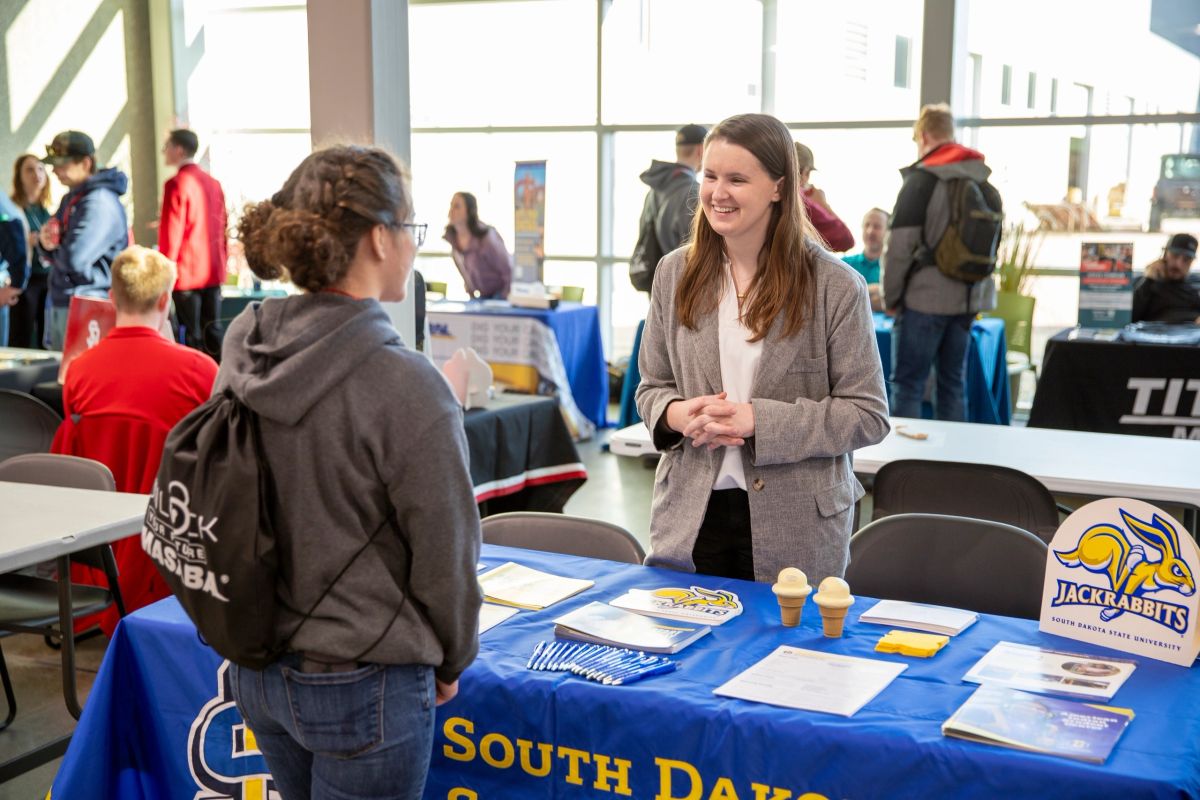
State medals are not won in April. They are won in the months of deliberate preparation before it. Here is the full playbook South Dakota competitors and advisors use to turn contest standards into gold.
Every spring, hundreds of South Dakota career and technical education students converge for the SkillsUSA South Dakota State Leadership and Skills Conference. They compete in contests spanning construction, transportation, manufacturing, health science, information technology, hospitality, and leadership. A small number leave with gold medals and the right to represent South Dakota at the National Leadership and Skills Conference. Most leave with something almost as valuable — a precise, unsentimental measurement of where their skills stand against an industry standard.
Here is the part most first-time competitors miss: the difference between a medalist and a mid-pack finisher is rarely raw talent. It is preparation quality. Gold medalists tend to prepare in a specific, structured way that anyone can copy. This playbook lays out that method, contest-agnostic, so a welding competitor and a job interview competitor can both use it.
Step one: read the technical standards like a contract
Every SkillsUSA contest is governed by published technical standards that describe the scope of the competition, the equipment and materials, the clothing requirements, the tasks, and — critically — the scoring rubric. Most students skim this document once. Medalists treat it as the definitive source of truth and return to it weekly.
When you read the standards, extract four things and write them down:
- The scored components and their point weights. If professional development is worth 20 percent, it deserves 20 percent of your practice time — not five minutes the night before.
- The equipment and materials list, split into what the contest supplies and what you must bring. Missing tools cost points and composure.
- The official clothing requirement. Students are penalized or barred from competing over dress code every single year, and it is entirely avoidable.
- The eliminations and penalties section. Knowing exactly what disqualifies you is cheap insurance.
Then translate the rubric into a practice checklist. If the rubric awards points for shop cleanliness, safety compliance, and time management, those are not soft extras — they are scored line items you can guarantee before you ever touch the technical task.
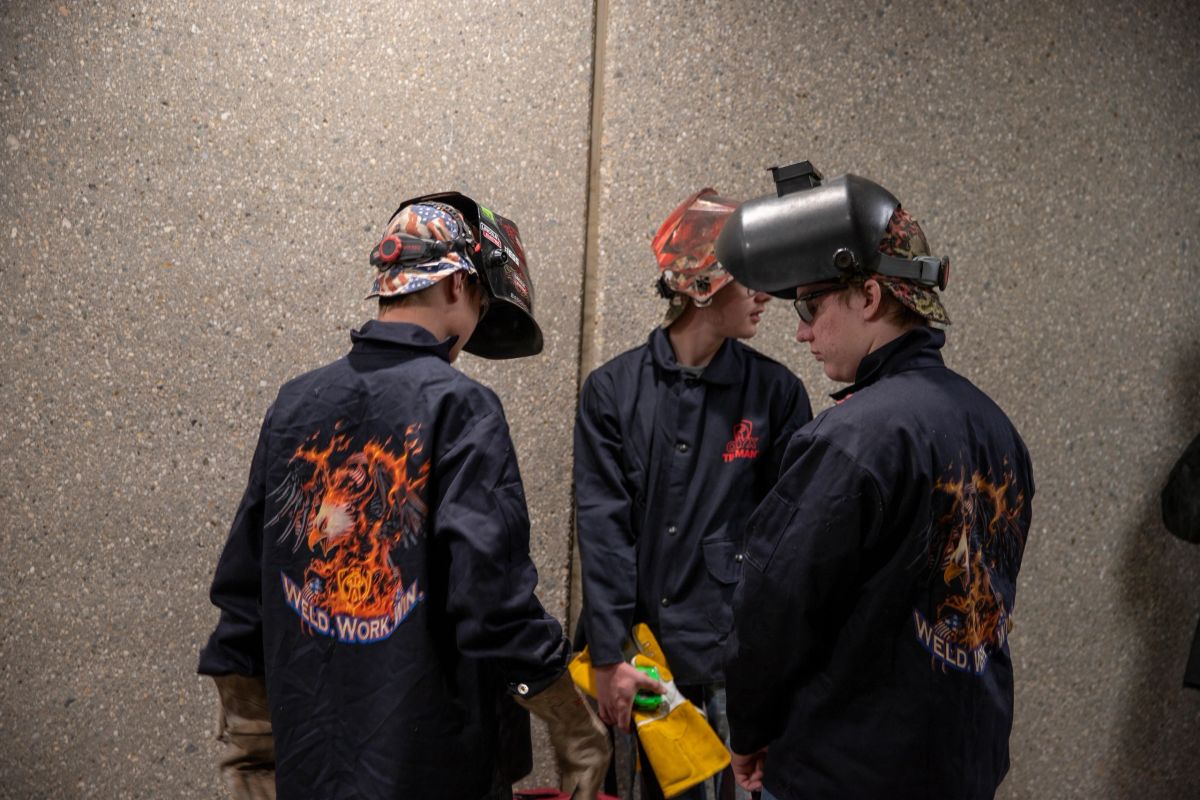
Step two: build a real training calendar
Vague intent produces vague results. 'I'm going to practice a lot before state' is not a plan. A training calendar is. Work backward from the state conference date and block out weekly sessions with a specific objective for each one.
A workable twelve-week structure looks like this:
- Weeks 1–3, foundation: rebuild fundamentals. Slow, correct repetitions. No timing yet. Fix technique errors before they get faster and more permanent.
- Weeks 4–6, component mastery: break the contest into discrete tasks and drill each one in isolation until it is reliable.
- Weeks 7–9, integration: run full-length mock contests under real time limits, with your advisor scoring you on the actual rubric.
- Weeks 10–11, pressure and polish: mock contests with an audience, unfamiliar equipment if possible, and deliberately introduced disruptions. Refine the professional development components.
- Week 12, taper: reduce volume, review the standards one final time, prepare your kit, and rest. Cramming the week of state has never produced a medal.
Keep a training log. One line per session: what you practiced, what went wrong, what you will fix next time. Reviewing four weeks of logs before a mock contest reveals patterns that memory alone hides.
Step three: win the points everyone else throws away
Many SkillsUSA contests include components beyond the core technical task — a résumé, a written knowledge test, an interview, a safety test, or a professional presentation. These components are where a substantial share of state medals are decided, because a large fraction of competitors under-prepare for them.
The résumé
Where a résumé is required, it is scored against professional criteria: formatting consistency, clarity, absence of errors, and relevance. Build yours around accomplishments rather than duties. 'Fabricated and welded 40 trailer frames to production tolerance' beats 'responsible for welding.' Include your certifications, contest history, chapter leadership, and community service. Then have three people proofread it — an English teacher, your CTE instructor, and someone who works in the industry. A single typo on a scored résumé is a free point donated to your competition.
The written test
Written components typically draw from the same technical standards, safety material, and industry fundamentals your program already teaches. The highest-yield preparation is old-fashioned: build a deck of terms, formulas, symbols, safety rules, and tool identifications, and review it in short bursts several times a week rather than in one long session. Spaced repetition works; marathon cramming does not.
The interview and professional presence
If your contest includes an interview, practice out loud with an adult who will actually critique you. Prepare a clean, honest, 60-second answer to 'tell me about yourself,' three specific stories you can adapt to behavioral questions, and two genuine questions to ask the judge. Practice a handshake, eye contact, and sitting up. These sound trivial. Judges score them, and they carry into every job interview you will ever have.
Competitors lose more points to preventable presentation errors than to genuine technical gaps.
Step four: prepare your kit like a professional
Two weeks before the state conference, lay out every item you are allowed and required to bring against the standards list, item by item, checking each one off physically. Then pack it in a way that survives travel and lets you find anything in ten seconds under stress.
- Tools and consumables specified in the standards — plus spares of anything that can break, dull, or run out.
- Official SkillsUSA clothing, cleaned, pressed, and verified against the current requirement.
- Required documents: résumés in the specified quantity, contest confirmation, and identification.
- Safety gear: glasses, gloves, hearing and eye protection, and closed footwear appropriate to your contest.
- Basics that keep you functional: water, non-messy snacks, a watch, and a phone charger.
Then do one full dress rehearsal in the exact clothing and with the exact kit. Discovering that your safety glasses fog under your face shield is a problem best solved in your school shop, not in the contest area.
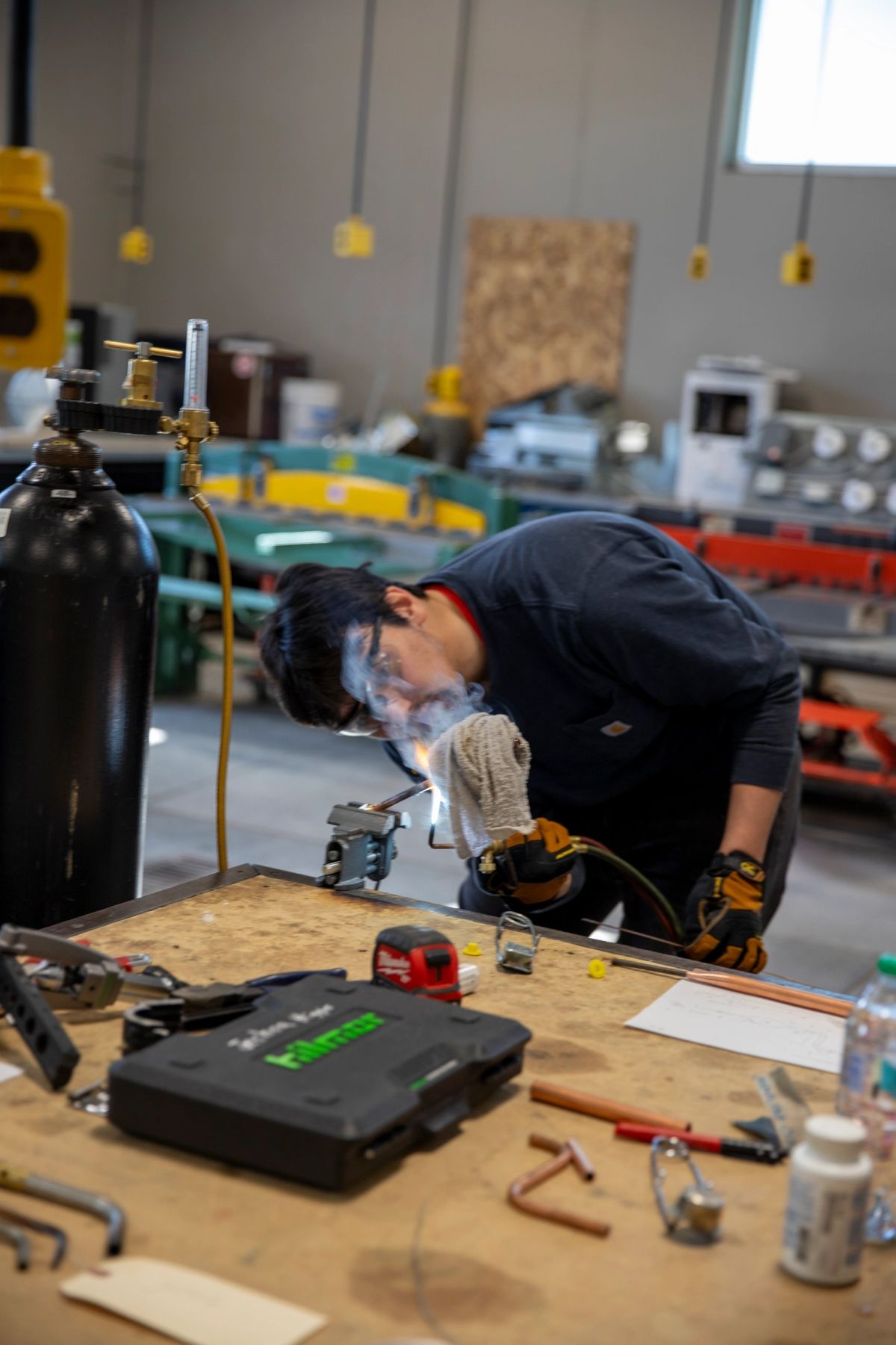
Step five: manage the day itself
Conference day introduces variables you cannot fully control: unfamiliar equipment, noise, an audience, a schedule that shifts, and a nervous system that is louder than usual. What you can control is your process.
The night before
Sleep beats one more review session. Lay out clothing and kit, confirm your report time and location, eat normally, and get to bed. Students who stay up rehearsing until midnight consistently underperform students who slept.
The orientation
Contest orientation is where the specific task, any deviations from the standards, and the day's rules are announced. Take notes. Ask clarifying questions immediately — judges answer them then, not once the clock starts. Many disqualifications trace back to a competitor who assumed rather than asked.
The first ten minutes
Do not start fast. Start correct. Read the task sheet twice. Inventory your materials. Plan your sequence and note the time you should be finishing each stage. Set up your workspace deliberately. Competitors who sprint into the first step routinely lose more time to rework than they saved.
When something goes wrong
Something will. A machine will behave differently than the one you trained on, a measurement will be off, a step will fail. Judges are watching how you respond, and composure is often scored directly. Stop, breathe, assess, and adapt out loud in your own head: what is the highest-value action right now with the time remaining? Partial credit is real. Abandoning the task is the only unrecoverable move.
Finish clean
Reserve the final minutes for the things that are always scored: cleanup, tool return, safe shutdown, and a final inspection of your work against the task sheet. This is the cheapest set of points in any contest, and tired competitors skip it every year.
Step six: use the results, whatever they are
If you medal, the work is not finished — a state gold in most contests means representing South Dakota at the national conference against the strongest competitors in the country. Debrief within 48 hours while the details are fresh, identify the three things that nearly cost you, and start a new training block immediately.
If you do not medal, you still received something valuable: an itemized, industry-benchmarked assessment of your work. Request your score sheet, sit down with your advisor, and convert every deduction into a practice objective for next season. A large share of state champions did not medal their first year. What they did was treat the score sheet as instructions rather than a verdict.
Notes for advisors
Advisors decide whether preparation is systematic or improvised. A few practices distinguish programs that consistently produce medalists:
- Start contest prep in the fall, not in March. Programs that begin at Fall FOCUS have double the runway of programs that start after the new year.
- Score mock contests with the real rubric and give students the actual numbers. Vague encouragement does not improve performance; specific deductions do.
- Recruit industry professionals to judge your mock contests. Outside eyes catch what familiarity hides, and those professionals often become sponsors.
- Build a returning-competitor culture where upperclassmen coach freshmen. Peer coaching multiplies your reach and develops leadership at the same time.
- Document everything — score sheets, training plans, kit lists — so next year's team starts where this year's finished.
What competition is actually for
Medals are the visible outcome, but they are not the point. The point is that SkillsUSA competition compresses years of professional development into a season. Competitors learn to read a specification, plan work backward from a deadline, perform a technical task to standard under observation, recover from setbacks without unraveling, and present themselves credibly to adults who hire people for a living.
Those are the exact capabilities South Dakota employers say they cannot find. Which is why a student who prepares seriously for a state contest walks away with far more than a medal — and why the students who never place still finish the season measurably more employable than they started it.
Talk to your advisor about the contests offered in your program area, get the current technical standards in your hands, and start your twelve-week clock. The state conference date is already on the calendar.
Get involved with SkillsUSA South Dakota
Students, advisors, and industry partners across South Dakota build the state's skilled workforce together. Start a chapter, sponsor a contest, or bring your students to the state conference in Watertown.