Welding is one of South Dakota's most in-demand skilled trades. Here is how students move from a high school shop class to a certified, well-paid career — and how SkillsUSA South Dakota competition accelerates the whole process.
Walk through almost any manufacturing floor, farm equipment dealership, pipeline yard, or fabrication shop in South Dakota and you will hear the same thing from the person in charge: they need welders. Not eventually. Now. The demand is not a marketing line invented to fill classroom seats — it is a structural feature of a state whose economy runs on agriculture equipment, food processing, construction, energy infrastructure, and precision manufacturing. Every one of those industries depends on people who can join metal correctly, safely, and repeatably.
For a high school student in Watertown, Rapid City, Sioux Falls, Mitchell, Aberdeen, or a town of 400 people with one shop teacher and a lot of ambition, that demand is an opportunity. Welding is one of the few career fields where a motivated student can graduate high school, complete a focused technical program, and step into work that pays well, travels well, and never stops teaching them something new. This guide walks through what that path actually looks like in South Dakota — the training, the certifications, the realistic earnings picture, and the role SkillsUSA competition plays in turning a decent welder into a hireable one.
Why welding matters so much to South Dakota's economy
South Dakota's industrial base is unusually welding-dependent for a state its size. Agricultural implement manufacturers build and repair equipment that has to survive brutal seasonal use. Food processing plants require stainless steel fabrication held to sanitation standards. Construction and infrastructure work — bridges, grain handling systems, commercial steel buildings — needs structural welders who can pass code tests. Energy work, from wind tower components to pipeline maintenance, adds another layer of demand. And every one of those sectors competes for the same limited pool of qualified people.
The result is a labor market where employers routinely tell career and technical education programs that they will hire every graduate who can pass a weld test and show up on time. That is a genuinely rare thing. In most fields, students hunt jobs. In welding, jobs hunt students. The catch — and there is always a catch — is the phrase 'can pass a weld test.' Enthusiasm does not pass a bend test. Practice does.
The high school starting line
Most South Dakota welders start in a high school ag mechanics, industrial technology, or welding class. If your school offers one, take it early and take it every year it is available. The reason is simple: welding skill is muscle memory built through repetition under supervision. A student who runs beads for three years before graduation is not three times better than a student who starts senior year — they are in a different category entirely.
What a strong high school program gives you:
- Fundamental process exposure — shielded metal arc (stick), gas metal arc (MIG), flux-cored, and ideally gas tungsten arc (TIG).
- Safety habits that become automatic: PPE, ventilation, hot work awareness, cylinder handling, and fire watch discipline.
- Blueprint and symbol reading, which separates a person who can weld from a person who can build.
- Measurement, layout, and fit-up practice — the unglamorous work that determines whether the weld is even possible.
- A teacher who will tell you the truth about your work, which is worth more than any online tutorial.
If your school does not offer welding, you still have options. Some South Dakota districts share CTE facilities across a region, dual-credit arrangements with technical colleges let juniors and seniors take college-level courses, and summer camps hosted by technical colleges and employers can fill part of the gap. Ask your counselor directly and specifically: 'What is the fastest path for me to get welding instruction and college credit before I graduate?' Counselors handle a lot of requests; a specific one gets a specific answer.
Technical college: the highest-leverage two years
South Dakota's technical colleges are the backbone of the state's skilled trades pipeline. Programs typically run one to two years and are built in direct partnership with the employers who will hire the graduates. That partnership shows up in the details — the equipment matches what shops actually run, the projects mirror real production work, and instructors have spent years in industry rather than only in classrooms.
A typical welding technology program covers:
- Process depth across SMAW, GMAW, FCAW, and GTAW in multiple positions — flat, horizontal, vertical, and overhead.
- Metallurgy fundamentals: what heat actually does to steel, stainless, and aluminum, and why the wrong procedure cracks a joint months later.
- Blueprint interpretation and weld symbol fluency at a level employers expect on day one.
- Welding codes and procedure qualification, including the structure of AWS D1.1 structural work.
- Inspection and quality: visual inspection, common discontinuities, and an introduction to nondestructive testing methods.
- Fabrication practice — cutting, forming, fit-up, and jigs — because most welding jobs are really fabrication jobs.
The financial math on these programs is worth taking seriously. Two years of technical training is a fraction of the cost of a four-year degree, and the earnings start immediately after. South Dakota also has an unusually deep scholarship ecosystem for the trades — state workforce scholarships, employer-sponsored tuition programs, industry association awards, and local foundation grants. Many students combine three or four sources and pay very little out of pocket. Apply for everything. The applications take an evening; the payoff lasts a career.
Certifications: the currency of the trade
In welding, credentials are not decorative. A weld certification is a documented, witnessed demonstration that you produced a sound weld to a specific procedure, in a specific position, on a specific material and thickness range. Employers care about them because they transfer risk: a certified welder is a known quantity.
The credentials that matter most for South Dakota students:
- AWS certifications tied to a welding procedure specification — often the D1.1 structural steel tests that construction and fabrication employers request by name.
- Employer or third-party weld tests, which many shops administer in-house as part of hiring.
- OSHA 10 safety certification, which some employers treat as a baseline for any shop floor role.
- Forklift, overhead crane, and rigging certifications, which make a new hire immediately more useful in a fabrication environment.
- NCCER or similar industry credentials where your program or employer uses that framework.
A practical note that students consistently underestimate: certifications are position-specific and can expire or require maintenance documentation. Keep a physical and digital folder from the first day of your program. Test records, procedure numbers, dates, and instructor signatures should live somewhere you can find them in five minutes when a hiring manager asks. People lose jobs to disorganization more often than to skill gaps.
What welders actually earn — and what drives the number
Pay in welding varies more than in most fields, and any single number quoted without context is misleading. Instead of a headline figure, it helps to understand the variables that move earnings up or down, because students have real control over most of them.
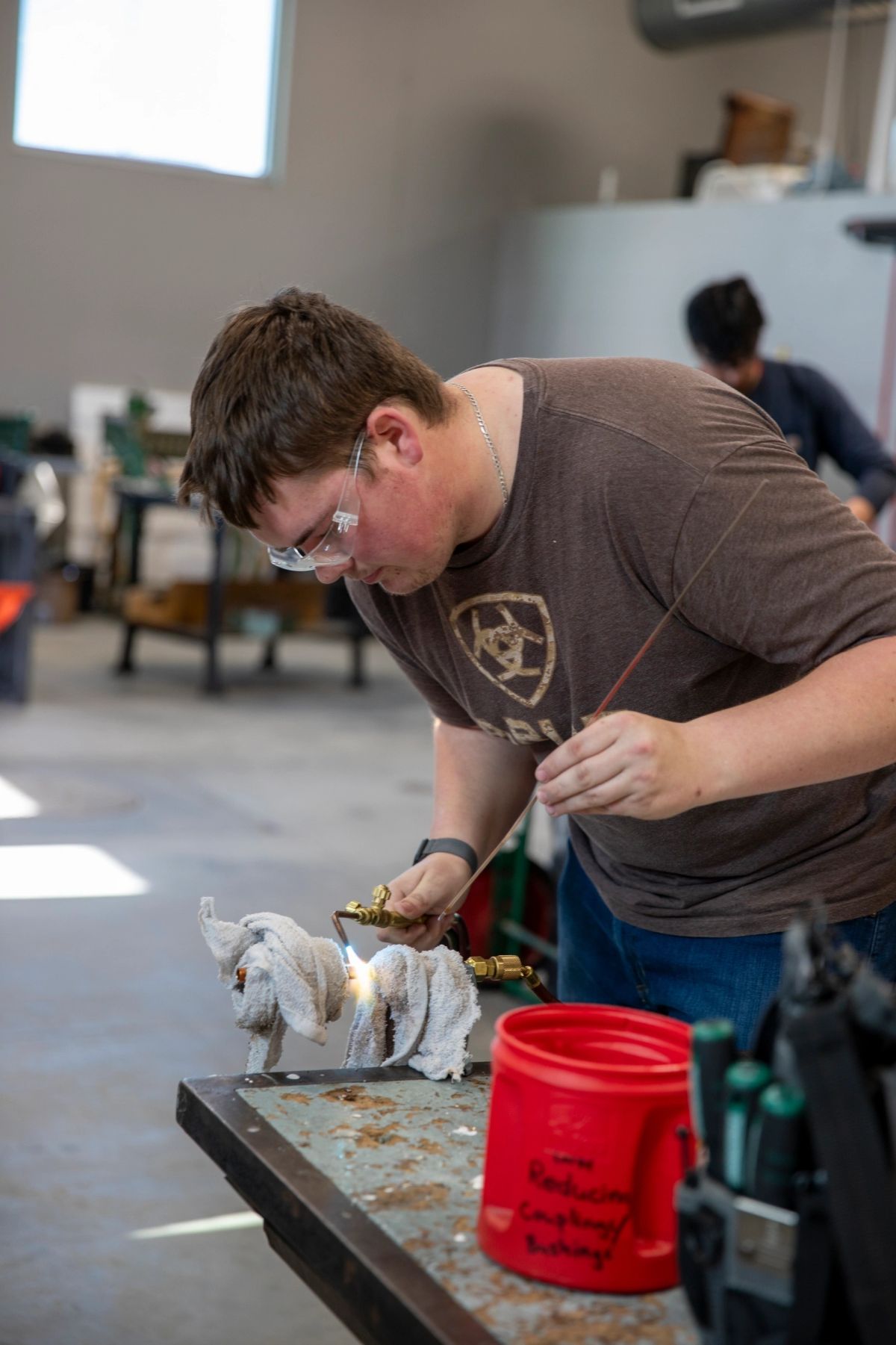
- Process and position skill. A welder certified for overhead and vertical work in multiple processes is worth substantially more than one who only runs flat MIG.
- Industry. Structural, pipe, and specialty stainless or aluminum work generally pays above general production welding.
- Shift and travel. Night shifts, weekend coverage, and travel or per-diem road work carry premiums.
- Certifications held and maintained. Each qualified procedure widens the set of jobs you can legally perform.
- Adjacent capability. Welders who can also read prints fluently, run a plasma table, program a robotic cell, or lead a crew move into higher pay bands faster.
- Reliability. Every shop foreman in South Dakota will say the same thing: the welder who is there at 6:58 a.m. every day gets the overtime, the certifications, and the promotion.
The most reliable earnings advice for a South Dakota welding student is unglamorous: stack certifications early, say yes to the hard positions, and become the person who can do the job nobody else in the shop wants. Specialty capability compounds. Five years of deliberately widening your qualifications produces an entirely different career than five years of running the same easy joint.
Where SkillsUSA competition changes the trajectory
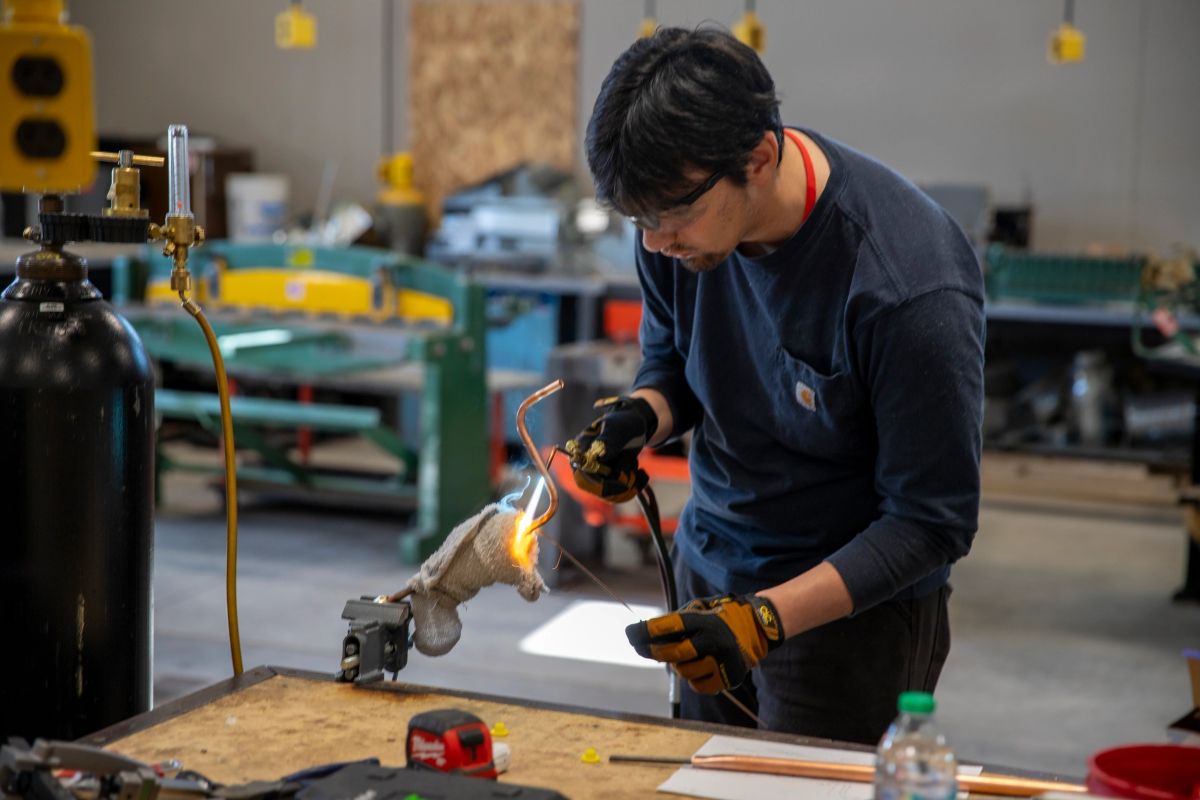
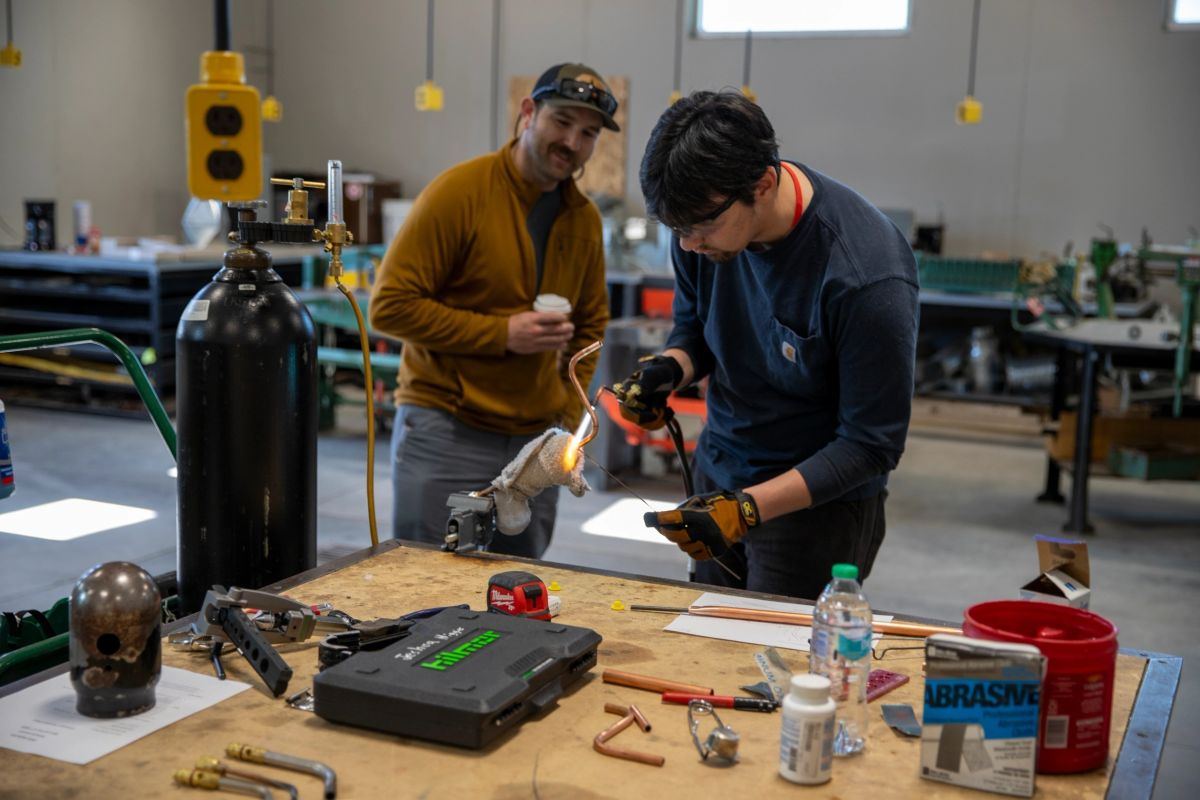
SkillsUSA South Dakota runs welding and welding-adjacent contests — including welding sculpture and fabrication events — as part of the SkillsUSA Championships at the state conference. It is easy to look at competition as an extracurricular nicety. It is not. For a welding student, contest preparation is the single most efficient training accelerant available, for four concrete reasons.
1. It imposes a real standard, judged by real employers
Classroom grades are calibrated to a class. Contest scoring is calibrated to industry. The judges are working professionals — shop owners, quality managers, instructors with decades of production experience — evaluating penetration, profile, undercut, distortion, and workmanship against the criteria they use at work. Getting scored by that panel tells a student exactly where they stand relative to the job market, not relative to their classmates.
2. It forces performance under pressure
Every weld test a student will ever take for employment happens under time pressure, in an unfamiliar booth, with someone watching. Competition is a rehearsal for exactly that. Students who have competed twice walk into an employer weld test noticeably calmer than students who never have, and calm hands produce better welds.
3. It builds the employability layer around the technical skill
SkillsUSA structures competition around a framework of personal skills, workplace skills, and technical skills grounded in academics. Contestants prepare résumés, present themselves professionally, follow written instructions precisely, and manage their own time and materials. Those are the exact behaviors that determine whether a technically capable new hire lasts. Employers rarely fire welders for bad welds; they lose them to attendance, communication, and attitude.
4. It puts students in front of people who hire
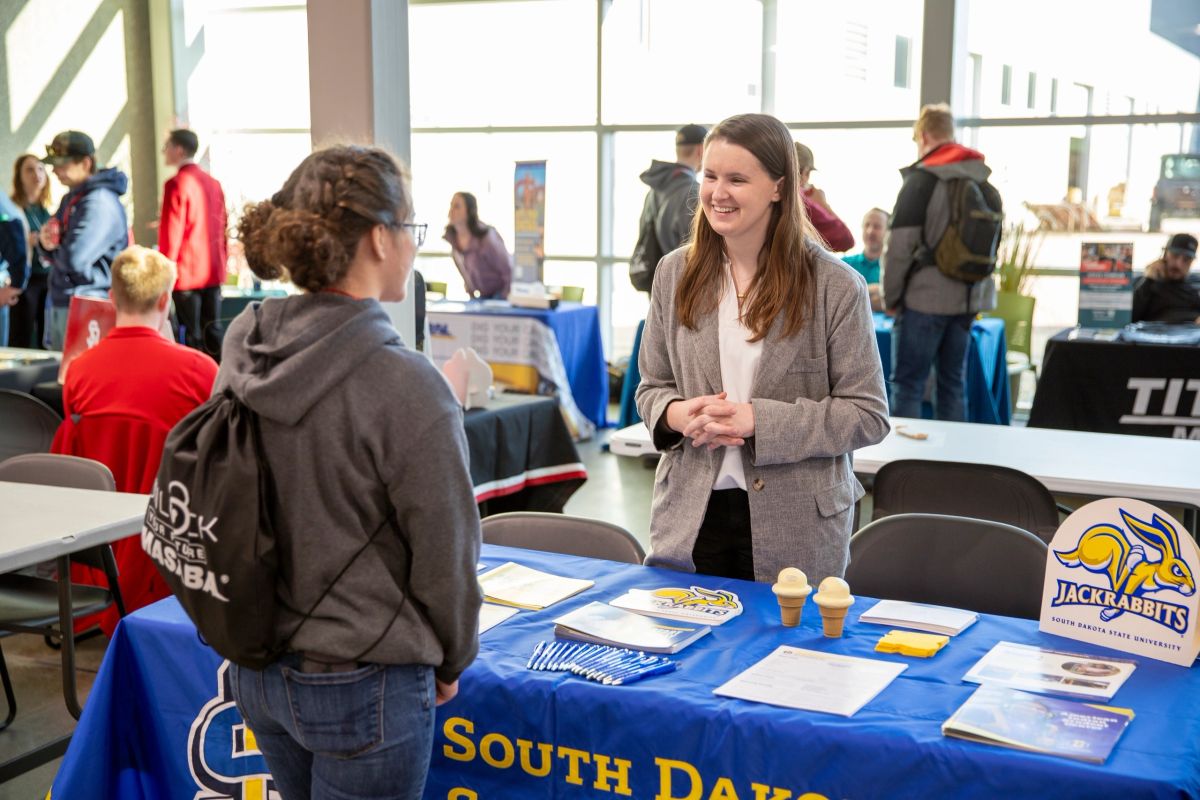
The state conference in Watertown is not just a competition — it is a hiring event with a competition attached. Sponsors, judges, and partner employers walk the contest floor watching students work. Every year, South Dakota students leave the conference with contacts, interview offers, internships, and scholarship leads that never would have existed otherwise. A student's performance in a two-hour contest is a live work sample delivered directly to decision-makers.
Employers do not need to guess how a contest medalist works under pressure. They watched it happen.
A four-year plan for a South Dakota welding student
If you want a concrete roadmap, this is the one we would hand a freshman who says they want to weld for a living.
Freshman year
- Get into an intro industrial tech, ag mechanics, or welding course.
- Join your school's SkillsUSA chapter. If there is not one, ask your CTE teacher about starting one — the process is simpler than most people expect.
- Focus obsessively on safety habits and shop discipline. Reputation forms early.
- Attend the state conference as an observer or in a leadership contest if a technical entry is not available yet.
Sophomore year
- Move into intermediate welding coursework and start logging deliberate practice hours outside class time.
- Learn blueprint reading and weld symbols properly. This is where students separate.
- Compete at the state level in a technical contest and treat the score sheet as a training plan.
- Start a credential folder and a simple portfolio of photographed work.
Junior year
- Pursue dual-credit or articulated technical college coursework if available.
- Target your first industry-recognized certification.
- Look for a summer shop job, even a low-level one — sweeping a fabrication floor teaches production reality that no classroom does.
- Compete again, aiming for the medal round, and take on a chapter leadership role.
Senior year
- Apply broadly for technical college programs, apprenticeships, and every relevant scholarship.
- Add certifications in positions you have avoided. Overhead is uncomfortable and valuable.
- Build a real résumé with your credentials, contest results, and work history, and get it reviewed by an industry professional.
- Compete for a state championship and the chance to represent South Dakota at the national conference.
Advice for advisors and parents
Adults shape this pathway more than they realize. Three things consistently help. First, treat welding as a serious professional destination rather than a backup option — the students who thrive are the ones nobody told to 'have something to fall back on.' Second, connect students to working professionals early; a single shop tour can do more for motivation than a semester of encouragement. Third, protect practice time. Skill in this trade is a function of supervised repetitions, and nothing substitutes for hours under the hood.
For advisors specifically, competition preparation is a program-building tool as much as a student-development tool. Contest results attract administrative support, sponsor interest, and next year's enrollment. A chapter that sends welders to the national conference does not have a recruitment problem.
The bottom line
Welding rewards people who show up, practice deliberately, and keep adding qualifications. South Dakota happens to be an excellent place to do that: the employers are hungry, the technical training is strong and affordable, and the state's CTE network is tightly connected to industry. A student who starts in a high school shop, competes through SkillsUSA, earns a technical credential, and stacks certifications is not gambling on a career. They are building one with a very short feedback loop between effort and income.
If you are a student ready to start, talk to your CTE instructor about joining or starting a SkillsUSA chapter and get on the state conference schedule. If you are an employer who wants earlier access to this talent, sponsorship and judging put you directly in front of the students you will eventually hire.
Get involved with SkillsUSA South Dakota
Students, advisors, and industry partners across South Dakota build the state's skilled workforce together. Start a chapter, sponsor a contest, or bring your students to the state conference in Watertown.